
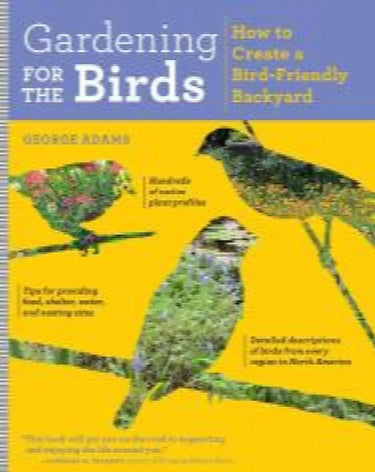
Gardening for the Birds: How to Create a Bird-Friendly Backyard by George Adams
This book will put you on the road to supporting and enjoying the life around you.--Douglas W. Tallamy, author of Bringing Nature Home You may already have a bird feeder in your yard, but you can attract a far wider range of species if you create a bird-friendly landscape. Gardening for the Birds shows you exactly how to do it. With profiles of hundreds of native plants, extensive seasonal bloom and fruiting charts, and techniques for creating a balanced ecosystem, this book helps you turn any space--from a small, urban terrace to a large suburban yard--into a home for a fascinating variety of birds. Close-up profiles of birds from across all regions of North America teach you their nesting, breeding, and feeding habits. Editorial Reviews From Booklist Birds have been celebrated in Egyptian hieroglyphs, medieval tapestries, and countless paintings and poems through the ages, symbolizing freedom and joy, and bringing song and color to our lives. Creating a bird-friendly garden is the making of a sanctuary for birds and people. Adams' how-to involves the use of native plants as the central structure both for building a cozy bird-welcoming ecosystem and aiding the preservation of North America's distinctive natural heritage. He provides steps for planning, which include providing food, shelter, water, and nesting sites and planting wildflowers. His coverage includes information on gardening regions, soil pH, fertility, and drainage, and preparing the soil, choosing native plants, developing a landscape plan, working with small spaces (including urban terraces), and more. Adams also provides both a plant and bird directory. Full-color photos and drawings throughout complement the text, and appendix materials include a metric conversion chart, lists of resources, recommended reading, and an index, making for an engaging and inspiring comprehensive guide. --Whitney Scott Review Adams' how-to involves the use of native plants as the central structure both for building a cozy bird-welcoming ecosystem and aiding the preservation of North America's distinctive natural heritage. He provides steps for planning, which include providing food, shelter, water, and nesting sites and planting wildflowers. . . . an engaging and inspiring comprehensive guide. --Booklist Helpfully detailed and brightly illustrated information about horticulture and garden design strategies. . . . this book will draw birders to gardening; gardeners to birding; and non-gardeners and non-birders to both. The charts are easy to read and the information about birds and bushes is accessibly organized, offering a sublime adventure for the average gardener. --Publishers Weekly A beautiful and comprehensive guide. . . . packed with hundreds of color photos of American birds--fiery cardinals, tawny sparrows, blazing bluebirds--and the vast array of attractive plants they prefer for feeding and nesting. --Chicago Tribune Adams has written this informative guide to help make even the simplest backyard more hospitable to birds. --Better Homes and Gardens If you'd like to create welcoming habitat for the birds most likely to occur in your area, this is the ultimate guide to help you make the best plant selections for doing so. --American Gardener If you own only one book about attracting birds--Gardening for the Birds has all the useful information you will need to create your own bird sanctuary in your own garden. --Birds and Blooms Among the best we've seen. . . . Adams describes how to develop a landscape plan, lists the best native plants for five regions of North America, and plots blooming times for hummingbird and butterfly flowers. --BirdWatching Gardening for the Birds is packed with interesting, useful information about both birds and the native plants they depend on, but it's truly beautiful too. The photographs are excellent, the layout is gorgeous, and there are impressive pen and ink illustrations by the author himself. I would go so far as to say that everyone interested in wildlife gardening should have this book! I have not seen a more thorough treatment of the subject by anyone for the home gardener, and the presentation is a quite a treat as well. --A Charlotte Garden This is a very good book about gardening for birds. . . . a fine choice if you're at all interested in attracting birds by gardening for them. --The Metropolitan Field Guide Whether you're a gardener who's new to birding or a birder who's new to gardening, I think you'll find Gardening for the Birds: How to Create a Bird-Friendly Backyard a valuable resource and one of those go-to book on your gardening, or is it birding, bookshelf. --Native Plants and Wildlife Gardens A must-have for anyone who enjoys gardening and finds joy awakening to the sounds of songbirds. --Newsday From the Back Cover Watching the swooping mating dance of a ruby-throated hummingbird or listening to the melodic whistle of a lark bunting puts us in touch with nature in a way that is often missing from our daily lives. Birds bring color, movement, and song to the garden and take away insect pests. You may already have a bird feeder in your yard, but you can attract a far wider range of species, and they will stay longer, if you create a bird-friendly landscape. Gardening for the Birds shows you how. With the right native plants, arranged to mimic natural ecosystems, you will provide birds with food, water, shelter, and nesting places. Instead of just visiting your garden to snack, birds will call it home. With hundreds of native plants, extensive seasonal bloom and fruiting charts, and the techniques for creating a balanced ecosystem, this book helps you turn any space--from a small, urban terrace to a large suburban yard--into a home for a fascinating variety of birds. From the Back Cover Watching the swooping mating dance of a ruby-throated hummingbird or listening to the melodic whistle of a lark bunting puts us in touch with nature in a way that is often missing from our daily lives. Birds bring color, movement, and song to the garden and take away insect pests. You may already have a bird feeder in your yard, but you can attract a far wider range of species, and they will stay longer, if you create a bird-friendly landscape. Gardening for the Birds shows you how. With the right native plants, arranged to mimic natural ecosystems, you will provide birds with food, water, shelter, and nesting places. Instead of just visiting your garden to snack, birds will call it home. With hundreds of native plants, extensive seasonal bloom and fruiting charts, and the techniques for creating a balanced ecosystem, this book helps you turn any space--from a small, urban terrace to a large suburban yard--into a home for a fascinating variety of birds. About the Author George Adams is a landscape designer, wildlife artist, photographer, writer, and traveler. Drawing on a lifelong interest in natural science and concern for the damage inflicted by the built environment on the natural world, he developed a concept for landscaping in which birds and other wildlife are a vital part of the garden's design. Excerpt. ® Reprinted by permission. All rights reserved. Introduction Birds have inspired mankind through the ages, bringing joy, song, and color to our gardens while taking away only insect pests. You and your family can have countless hours of pleasure from birds, plants, and the natural environment when you create a bird-friendly garden as your own backyard sanctuary. Your garden will become a source of entertainment and a restful escape from the pressures of the outside world. When you landscape your yard with carefully chosen regional native plants to provide food, shelter, and nesting sites for birds, you'll find that an increased variety of birds will visit--species that might not usually be regarded as garden birds or attracted to a bird feeder. You will be providing a variety of food niches in your garden, and you will also be creating an environment that will encourage biodiversity, from the tiny organisms we are barely aware of, to captivating butterflies, moths, and dragonflies. Even if you only have a small place for planting, choosing plants that are beneficial to birds will add to the overall availability of habitat for our local bird populations. A great benefit of creating a bird-friendly landscape is enjoying your garden while watching a bluebird dropping in for a worm in a freshly dug patch, a phoebe snapping at insects, or a hummingbird probing nectar-rich flowers while robins sing in the trees. Simply put, when you create a garden with attracting birds in mind, you will be providing an open invitation for spectacular birds to make your garden their home. To attract birds to your garden, the backbone of your landscaping plan should be local native plants. By putting in native plants and using an organic, sustainable approach to gardening, you establish a balanced ecosystem in your yard. A greater variety of birds and butterflies will visit and linger, insect pests will be kept under control by insect-eating birds (reducing the need for harmful insecticides), and the wonder of nature will be part of your everyday living environment. The ultimate aim of this book is to give you the tools to set up a sustainable ecosystem in your own yard. There, the natural order of things can flourish and you can count the local birds among your companions. It is easy to turn an ordinary landscape into an extraordinary backyard filled with lively, colorful birds. In this book, I explain how. First, I introduce you to the basics of planning and creating a bird-friendly garden. I discuss the elements that all birds need--food, water, shelter, and nesting sites--and give you plenty of practical suggestions for providing them in your yard. You'll find details on creating a hummingbird garden, and how to use wildflowers to provide for butterflies and seed-eating birds. I've also included flowering and fruiting calendars to help you select plants for a continuous supply of nectar, fruit, and seeds. And I offer tips for the best native nesting and shelter plants and how to build nest boxes. Next, in part 2, I guide you through understanding how your yard fits into the larger environment of your region and what plants will grow well in your geographic area. I discuss the importance of native plants in attracting birds, and give you helpful information on planning and creating a garden that will be full of likely bird habitats. To help you get your garden up and growing, I include many how-to tips: on soil care, planting, plant care, and plant feeding. And to make this section even more useful, I clarify how to choose and use plants in the garden to attract the most diverse range of birds. You'll also find suggestions on working with small garden spaces, and how to protect your garden from pests and unwanted visitors. The Plant Directory, part 3, is a detailed guide to important North American native plants that provide food, shelter, and nesting sites for local birds. The native trees, shrubs, vines, perennials, annuals, ground covers, and grasses I describe are all beautiful landscape plants that appeal to the gardener as much as to the birds. Many of them may already occur naturally in your area. Each plant is discussed and many are illustrated in a color photograph. You'll find a list of birds attracted to the plants. Then I give the best plant species for attracting birds, with descriptions, distribution, cultivation information, and hardiness zones for each. Part 4, the Bird Directory, provides discussion of many of the delightful birds you may want to attract to your backyard garden. I have featured a broad selection of the most beloved birds from coast to coast, from the eastern bluebird to Anna's hummingbird. Each entry has a photo of the bird and one of my original drawings of the bird with a favorite native plant. You'll find a description of the bird and its habits, what its song sounds like, plus its preferred habitat, breeding behavior, nesting style, and feeding habits. A range map is provided for each bird, along with its migration and winter range and its breeding range, so you can see if it lives or spends time in your area. A list of plants for food and shelter tells you good plant choices to attract each bird. At the back of the book, I've also provided a metric conversion chart. And if you want to learn more about birding and gardening to attract birds, I have included a resources section as well as a reading list. Joining some of the organizations listed in the resources is not only a great way to learn more; it's a wonderful way to meet other native plant enthusiasts and fellow bird fans. By establishing a bird-friendly ecosystem around your home, arresting color, birdsong, and antics of our native birds will add to the splendor of native trees, shrubs, and wildflowers to create a spiritually uplifting garden environment. You will also be making an important contribution toward the preservation of North America's distinctive natural heritage. Excerpt. ® Reprinted by permission. All rights reserved. Introduction Birds have inspired mankind through the ages, bringing joy, song, and color to our gardens while taking away only insect pests. You and your family can have countless hours of pleasure from birds, plants, and the natural environment when you create a bird-friendly garden as your own backyard sanctuary. Your garden will become a source of entertainment and a restful escape from the pressures of the outside world. When you landscape your yard with carefully chosen regional native plants to provide food, shelter, and nesting sites for birds, you'll find that an increased variety of birds will visit--species that might not usually be regarded as garden birds or attracted to a bird feeder. You will be providing a variety of food niches in your garden, and you will also be creating an environment that will encourage biodiversity, from the tiny organisms we are barely aware of, to captivating butterflies, moths, and dragonflies. Even if you only have a small place for planting, choosing plants that are beneficial to birds will add to the overall availability of habitat for our local bird populations. A great benefit of creating a bird-friendly landscape is enjoying your garden while watching a bluebird dropping in for a worm in a freshly dug patch, a phoebe snapping at insects, or a hummingbird probing nectar-rich flowers while robins sing in the trees. Simply put, when you create a garden with attracting birds in mind, you will be providing an open invitation for spectacular birds to make your garden their home. To attract birds to your garden, the backbone of your landscaping plan should be local native plants. By putting in native plants and using an organic, sustainable approach to gardening, you establish a balanced ecosystem in your yard. A greater variety of birds and butterflies will visit and linger, insect pests will be kept under control by insect-eating birds (reducing the need for harmful insecticides), and the wonder of nature will be part of your everyday living environment. The ultimate aim of this book is to give you the tools to set up a sustainable ecosystem in your own yard. There, the natural order of things can flourish and you can count the local birds among your companions. It is easy to turn an ordinary landscape into an extraordinary backyard filled with lively, colorful birds. In this book, I explain how. First, I introduce you to the basics of planning and creating a bird-friendly garden. I discuss the elements that all birds need--food, water, shelter, and nesting sites--and give you plenty of practical suggestions for providing them in your yard. You'll find details on creating a hummingbird garden, and how to use wildflowers to provide for butterflies and seed-eating birds. I've also included flowering and fruiting calendars to help you select plants for a continuous supply of nectar, fruit, and seeds. And I offer tips for the best native nesting and shelter plants and how to build nest boxes. Next, in part 2, I guide you through understanding how your yard fits into the larger environment of your region and what plants will grow well in your geographic area. I discuss the importance of native plants in attracting birds, and give you helpful information on planning and creating a garden that will be full of likely bird habitats. To help you get your garden up and growing, I include many how-to tips: on soil care, planting, plant care, and plant feeding. And to make this section even more useful, I clarify how to choose and use plants in the garden to attract the most diverse range of birds. You'll also find suggestions on working with small garden spaces, and how to protect your garden from pests and unwanted visitors. The Plant Directory, part 3, is a detailed guide to important North American native plants that provide food, shelter, and nesting sites for local birds. The native trees, shrubs, vines, perennials, annuals, ground covers, and grasses I describe are all beautiful landscape plants that appeal to the gardener as much as to the birds. Many of them may already occur naturally in your area. Each plant is discussed and many are illustrated in a color photograph. You'll find a list of birds attracted to the plants. Then I give the best plant species for attracting birds, with descriptions, distribution, cultivation information, and hardiness zones for each. Part 4, the Bird Directory, provides discussion of many of the delightful birds you may want to attract to your backyard garden. I have featured a broad selection of the most beloved birds from coast to coast, from the eastern bluebird to Anna's hummingbird. Each entry has a photo of the bird and one of my original drawings of the bird with a favorite native plant. You'll find a description of the bird and its habits, what its song sounds like, plus its preferred habitat, breeding behavior, nesting style, and feeding habits. A range map is provided for each bird, along with its migration and winter range and its breeding range, so you can see if it lives or spends time in your area. A list of plants for food and shelter tells you good plant choices to attract each bird. At the back of the book, I've also provided a metric conversion chart. And if you want to learn more about birding and gardening to attract birds, I have included a resources section as well as a reading list. Joining some of the organizations listed in the resources is not only a great way to learn more; it's a wonderful way to meet other native plant enthusiasts and fellow bird fans. By establishing a bird-friendly ecosystem around your home, arresting color, birdsong, and antics of our native birds will add to the splendor of native trees, shrubs, and wildflowers to create a spiritually uplifting garden environment. You will also be making an important contribution toward the preservation of North America's distinctive natural heritage.
Publication Details
Title:
Author(s):
Illustrator:
Binding: Paperback
Published by: Timber Press: , 2013
Edition:
ISBN: 9781604694093 | 1604694092
444 pages.
Book Condition: Very Good
products.product.pickup_availability.unavailable
Product information
New Zealand Delivery
Shipping Options
Shipping options are shown at checkout and will vary depending on the delivery address and weight of the books.
We endeavour to ship the following day after your order is made and to have pick up orders available the same day. We ship Monday-Friday. Any orders made on a Friday afternoon will be sent the following Monday. We are unable to deliver on Saturday and Sunday.
Pick Up is Available in NZ:
Warehouse Pick Up Hours
- Monday - Friday: 9am-5pm
- 35 Nathan Terrace, Shannon NZ
Please make sure we have confirmed your order is ready for pickup and bring your confirmation email with you.
Rates
-
New Zealand Standard Shipping - $6.00
- New Zealand Standard Rural Shipping - $10.00
- Free Nationwide Standard Shipping on all Orders $75+
Please allow up to 5 working days for your order to arrive within New Zealand before contacting us about a late delivery. We use NZ Post and the tracking details will be emailed to you as soon as they become available. There may be some courier delays that are out of our control.
International Delivery
We currently ship to Australia and a range of international locations including: Belgium, Canada, China, Switzerland, Czechia, Germany, Denmark, Spain, Finland, France, United Kingdom, United States, Hong Kong SAR, Thailand, Philippines, Ireland, Israel, Italy, Japan, South Korea, Malaysia, Netherlands, Norway, Poland, Portugal, Sweden & Singapore. If your country is not listed, we may not be able to ship to you, or may only offer a quoting shipping option, please contact us if you are unsure.
International orders normally arrive within 2-4 weeks of shipping. Please note that these orders need to pass through the customs office in your country before it will be released for final delivery, which can occasionally cause additional delays. Once an order leaves our warehouse, carrier shipping delays may occur due to factors outside our control. We, unfortunately, can’t control how quickly an order arrives once it has left our warehouse. Contacting the carrier is the best way to get more insight into your package’s location and estimated delivery date.
- Global Standard 1 Book Rate: $37 + $10 for every extra book up to 20kg
- Australia Standard 1 Book Rate: $14 + $4 for every extra book
Any parcels with a combined weight of over 20kg will not process automatically on the website and you will need to contact us for a quote.
Payment Options
On checkout you can either opt to pay by credit card (Visa, Mastercard or American Express), Google Pay, Apple Pay, Shop Pay & Union Pay. Paypal, Afterpay and Bank Deposit.
Transactions are processed immediately and in most cases your order will be shipped the next working day. We do not deliver weekends sorry.
If you do need to contact us about an order please do so here.
You can also check your order by logging in.
Contact Details
- Trade Name: Book Express Ltd
- Phone Number: (+64) 22 852 6879
- Email: sales@bookexpress.co.nz
- Address: 35 Nathan Terrace, Shannon, 4821, New Zealand.
- GST Number: 103320957 - We are registered for GST in New Zealand
- NZBN: 9429031911290
We have a 30-day return policy, which means you have 30 days after receiving your item to request a return.
To be eligible for a return, your item must be in the same condition that you received it, unworn or unread.
To start a return, you can contact us at sales@bookexpress.co.nz. Please note that returns will need to be sent to the following address: 35 Nathan Terrace, Shannon, New Zealand 4821.
If your return is for a quality or incorrect item, the cost of return will be on us, and will refund your cost. If it is for a change of mind, the return will be at your cost.
You can always contact us for any return question at sales@bookexpress.co.nz.
Damages and issues
Please inspect your order upon reception and contact us immediately if the item is defective, damaged or if you receive the wrong item, so that we can evaluate the issue and make it right.
Exceptions / non-returnable items
Certain types of items cannot be returned, like perishable goods (such as food, flowers, or plants), custom products (such as special orders or personalised items), and personal care goods (such as beauty products). Although we don't currently sell anything like this. Please get in touch if you have questions or concerns about your specific item.
Unfortunately, we cannot accept returns on gift cards.
Exchanges
The fastest way to ensure you get what you want is to return the item you have, and once the return is accepted, make a separate purchase for the new item.
European Union 14 day cooling off period
Notwithstanding the above, if the merchandise is being shipped into the European Union, you have the right to cancel or return your order within 14 days, for any reason and without a justification. As above, your item must be in the same condition that you received it, unworn or unused, with tags, and in its original packaging. You’ll also need the receipt or proof of purchase.
Refunds
We will notify you once we’ve received and inspected your return, and let you know if the refund was approved or not. If approved, you’ll be automatically refunded on your original payment method within 10 business days. Please remember it can take some time for your bank or credit card company to process and post the refund too.
If more than 15 business days have passed since we’ve approved your return, please contact us at sales@bookexpress.co.nz.