
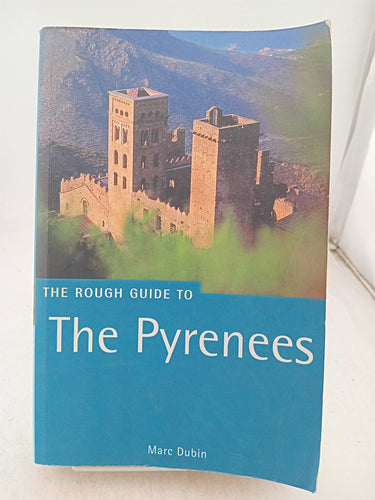
The Rough Guide to The Pyrenees by Marc Dubin,Brian Catlos,Lance Chilton
INTRODUCTION
Anyone could find their perfect retreat in the Pyrenees, a range that encompasses in its four-hundred-kilometre length a diversity of landscapes rarely equalled in Europe. Between the balmy beaches of the Mediterranean and the more turbulent Atlantic coast lie regions of lush meadowland, peaks permanently clad in ice, sun-beaten canyons of sinuously sculpted rock, swathes of dense broadleaf forest, weirdly eroded limestone pinnacles and valleys so sheer and overgrown that scarcely a ray of light penetrates them.
These mountains challenge and invite rather than intimidate. Generally rounded and crumbling, most of their peaks are attainable even to people with little experience of such terrain. Aneto, at 3404 metres the highest summit of the Pyrenees, stands within reach of any determined and properly equipped walker, as do all the next ranking peaks Posets, Monte Perdido and Vignemale. Other natural wonders of the range are also available to the averagely fit. The Valle de Ordesa, the most spectacular of many canyons, can be traversed on nearly level footpaths, as can the great glaciated amphitheatre of the Cirque de Gavarnie, just to the north. The stalactite-draped cavern of Lombrives is the largest cave in western Europe to which theres unrestricted public access, while a visit to the Sala de la Verna, the largest chamber in one of the worlds deepest cave systems the Gouffre Pierre-Saint-Martin requires no great physical effort. If you join an organized group, there are any number of lively rivers to raft down on both sides of the range, including the Noguera Pallaresa in Catalunya and the Gállego in Aragon, as well as several tamer ones on the French side. Canyoners of all ability levels are similarly well catered to in the "pre-Pyrenean" Sierra de Guara, also in Spanish Aragon.
Walking the entire range from end to end has become a classic endeavour, and thousands of people have followed the Haute Randonnee Pyreneenne (HRP) just to either side of the watershed, or the more circuitous, but less demanding, Grande Randonnee 10 (GR10) entirely within France. These long-established footpaths were supplemented during the 1980s by the equally spectacular Spanish Gran Recorrido 11 (GR11); maps for every part of the Pyrenees show numerous other, briefer itineraries, suitable for hikers at all levels.
The wildlife of the Pyrenees is exceptionally rich, despite the devastating impact of human activity on many of its most engaging species. Populations of deer and wild boar hide in the forests, and in certain dense woodlands a dwindling number of brown bear still manage to survive despite the depredations of hunters. In contrast, the ubiquitous isard or Pyrenean chamois is on the increase, as are shy wildcats; marmots are plentiful (and audible); while majestic birds of prey circle in the skies. The capercaillie, a game bird now extinct in the French Alps, still thrives in the Pyrenees, and the tiny desman, a sort of aquatic mole, is unknown anywhere else in western Europe, except the Picos de Europa.
Traces of human habitation in the Pyrenees predate recorded history by thousands of years, with artefacts found (and often displayed) at a half-dozen caves in the Ariege, the Couserans and the Comminges regions. The prehistoric painted caves around Tarascon-sur-Ariege are rivalled only by those of the Dordogne and the Spanish province of Cantabria, with the paintings in the Grotte de Niaux rated as the best examples open to public view anywhere in the world.
Architectural highlights of the Pyrenees are its extraordinary Romanesque churches and monasteries, of which there are literally hundreds, including such renowned examples as Saint-Martin-du-Canigou, Serrabone, Santa Maria de Ripoll, Sant Climent de Taull and a host of others in the Vall de Boi, Saint-Bertrand-de-Comminges, Saint-Lizier, San Juan de la Pena, and Saint-Engrace in the Haute-Soule. So-called "Roman" bridges still linking isolated villages are even older, though not necessarily pre-Christian. Towards the western half of the range, numerous monuments bear testimony to the thousands of pilgrims who during the Middle Ages followed the pilgrimage trail to Santiago de Compostela in Galicia via the fabled Puerto de Ibañeta near Roncesvalles, or the nearby Col du Somport. At the eastern end, from the Mediterranean to the Ariege, the strength of the heretical Cathar religion is reflected in many immensely evocative ruined castles, notably the crag-top citadel of Montsegur, site of the faiths effective extinction.
The people of the Pyrenees are as disparate as the landscape. The east and west ends of the range are the respective homelands of the Catalans and the Basques, each with a tenaciously preserved cultural vitality, as embodied in the sombre sardana, the Catalan communal dance, or the lightning-quick and potentially lethal Basque game of pelota/pelote. As you traverse the Pyrenees youll certainly hear Catalan, Aranese, Aragonese and Euskera (the Basque tongue), not to mention a few others notably Occitan not officially accorded the status of a distinct language. For centuries before the final unifications of France and Spain, every valley effectively constituted a mini-republic with its own argot and traditions, jealously guarding customary privileges against encroachment from distant central governments, and defying them further with a thriving trade in smuggling. Remoteness and neglect long made the mountains a refuge for political as well as religious dissidents, most recently during the Spanish Civil War and World War II when thousands of refugees took advantage of the shepherds and smugglers knowledge to evade capture. After 1968, hundreds of disillusioned French protesters and "alternative" types again took up residence in the back country, swelling the traditional local vote for the political Left and adopting the long-standing local habit of self-sufficiency. Indeed the Pyreneans historical disregard for the often-altered boundaries between France and Spain has been vindicated and accentuated by the post-1993 European single market, as old border posts lie abandoned and a strong regional identity bridging the watershed seems set to reassert itself.
After decades of playing second fiddle to the Alps, the Pyrenees have finally come into their own as a travellers destination. Infrastructure and amenities improve by the year, as exemplified by increasing numbers of quality lodgings (especially on the Spanish side), ever-multiplying adventure-sport outfitters and a plethora of no-frills airlines offering service into hitherto sleepy regional airports. It has never been easier to visit these mountains.
Publication Details
Title:
Author(s):
Illustrator:
Binding: Paperback
Published by: Rough Guides: , 2001
Edition:
ISBN: 9781858287010 | 1858287014
592 pages.
Book Condition: Good
cover worn,
products.product.pickup_availability.unavailable
Product information
New Zealand Delivery
Shipping Options
Shipping options are shown at checkout and will vary depending on the delivery address and weight of the books.
We endeavour to ship the following day after your order is made and to have pick up orders available the same day. We ship Monday-Friday. Any orders made on a Friday afternoon will be sent the following Monday. We are unable to deliver on Saturday and Sunday.
Pick Up is Available in NZ:
Warehouse Pick Up Hours
- Monday - Friday: 9am-5pm
- 35 Nathan Terrace, Shannon NZ
Please make sure we have confirmed your order is ready for pickup and bring your confirmation email with you.
Rates
-
New Zealand Standard Shipping - $6.00
- New Zealand Standard Rural Shipping - $10.00
- Free Nationwide Standard Shipping on all Orders $75+
Please allow up to 5 working days for your order to arrive within New Zealand before contacting us about a late delivery. We use NZ Post and the tracking details will be emailed to you as soon as they become available. There may be some courier delays that are out of our control.
International Delivery
We currently ship to Australia and a range of international locations including: Belgium, Canada, China, Switzerland, Czechia, Germany, Denmark, Spain, Finland, France, United Kingdom, United States, Hong Kong SAR, Thailand, Philippines, Ireland, Israel, Italy, Japan, South Korea, Malaysia, Netherlands, Norway, Poland, Portugal, Sweden & Singapore. If your country is not listed, we may not be able to ship to you, or may only offer a quoting shipping option, please contact us if you are unsure.
International orders normally arrive within 2-4 weeks of shipping. Please note that these orders need to pass through the customs office in your country before it will be released for final delivery, which can occasionally cause additional delays. Once an order leaves our warehouse, carrier shipping delays may occur due to factors outside our control. We, unfortunately, can’t control how quickly an order arrives once it has left our warehouse. Contacting the carrier is the best way to get more insight into your package’s location and estimated delivery date.
- Global Standard 1 Book Rate: $37 + $10 for every extra book up to 20kg
- Australia Standard 1 Book Rate: $14 + $4 for every extra book
Any parcels with a combined weight of over 20kg will not process automatically on the website and you will need to contact us for a quote.
Payment Options
On checkout you can either opt to pay by credit card (Visa, Mastercard or American Express), Google Pay, Apple Pay, Shop Pay & Union Pay. Paypal, Afterpay and Bank Deposit.
Transactions are processed immediately and in most cases your order will be shipped the next working day. We do not deliver weekends sorry.
If you do need to contact us about an order please do so here.
You can also check your order by logging in.
Contact Details
- Trade Name: Book Express Ltd
- Phone Number: (+64) 22 852 6879
- Email: sales@bookexpress.co.nz
- Address: 35 Nathan Terrace, Shannon, 4821, New Zealand.
- GST Number: 103320957 - We are registered for GST in New Zealand
- NZBN: 9429031911290
We have a 30-day return policy, which means you have 30 days after receiving your item to request a return.
To be eligible for a return, your item must be in the same condition that you received it, unworn or unread.
To start a return, you can contact us at sales@bookexpress.co.nz. Please note that returns will need to be sent to the following address: 35 Nathan Terrace, Shannon, New Zealand 4821.
If your return is for a quality or incorrect item, the cost of return will be on us, and will refund your cost. If it is for a change of mind, the return will be at your cost.
You can always contact us for any return question at sales@bookexpress.co.nz.
Damages and issues
Please inspect your order upon reception and contact us immediately if the item is defective, damaged or if you receive the wrong item, so that we can evaluate the issue and make it right.
Exceptions / non-returnable items
Certain types of items cannot be returned, like perishable goods (such as food, flowers, or plants), custom products (such as special orders or personalised items), and personal care goods (such as beauty products). Although we don't currently sell anything like this. Please get in touch if you have questions or concerns about your specific item.
Unfortunately, we cannot accept returns on gift cards.
Exchanges
The fastest way to ensure you get what you want is to return the item you have, and once the return is accepted, make a separate purchase for the new item.
European Union 14 day cooling off period
Notwithstanding the above, if the merchandise is being shipped into the European Union, you have the right to cancel or return your order within 14 days, for any reason and without a justification. As above, your item must be in the same condition that you received it, unworn or unused, with tags, and in its original packaging. You’ll also need the receipt or proof of purchase.
Refunds
We will notify you once we’ve received and inspected your return, and let you know if the refund was approved or not. If approved, you’ll be automatically refunded on your original payment method within 10 business days. Please remember it can take some time for your bank or credit card company to process and post the refund too.
If more than 15 business days have passed since we’ve approved your return, please contact us at sales@bookexpress.co.nz.